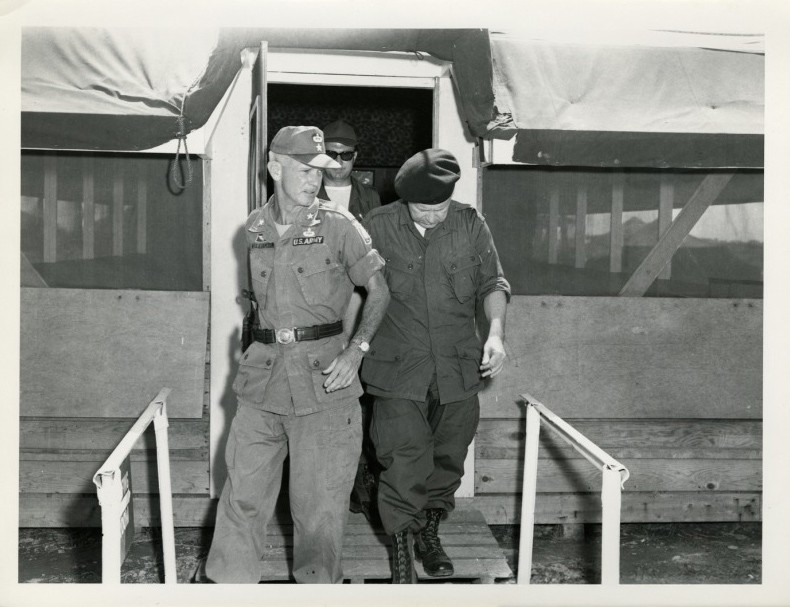
Garner J. Cline Papers
Garner J. Cline Papers
Date
Fall 2025
Fall 2025
Professor
Project Link
Google Drive
Project Description
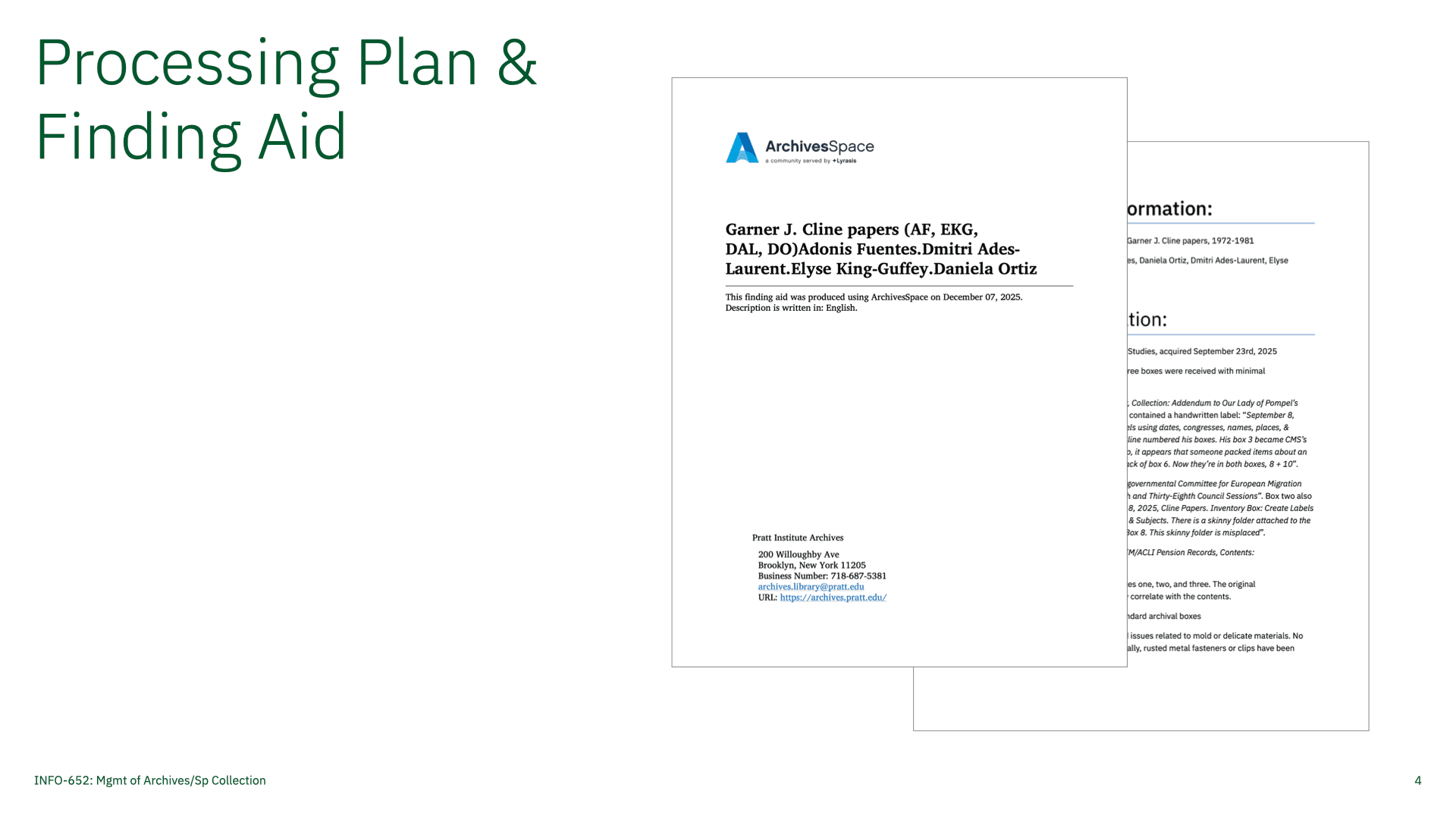
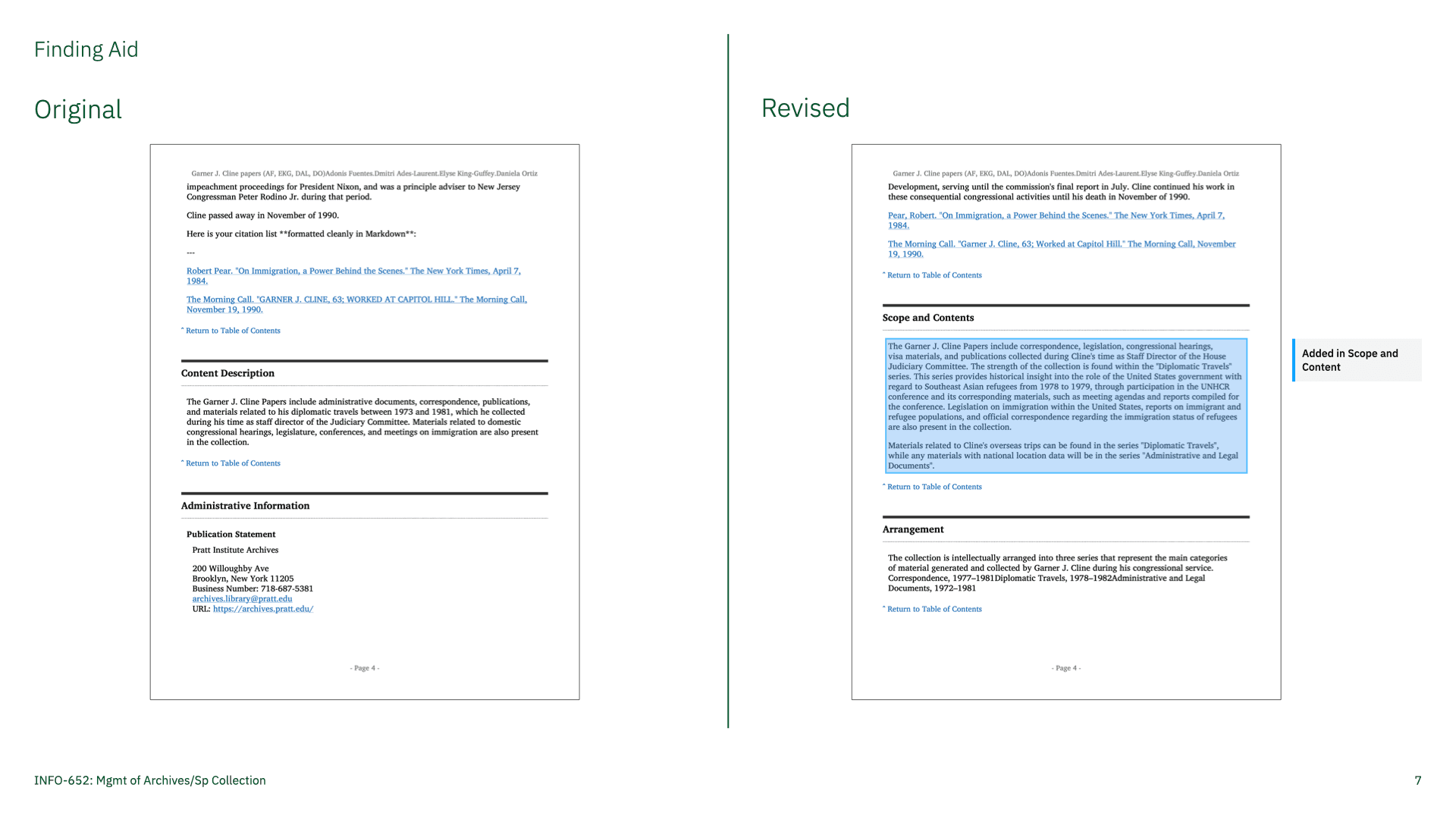
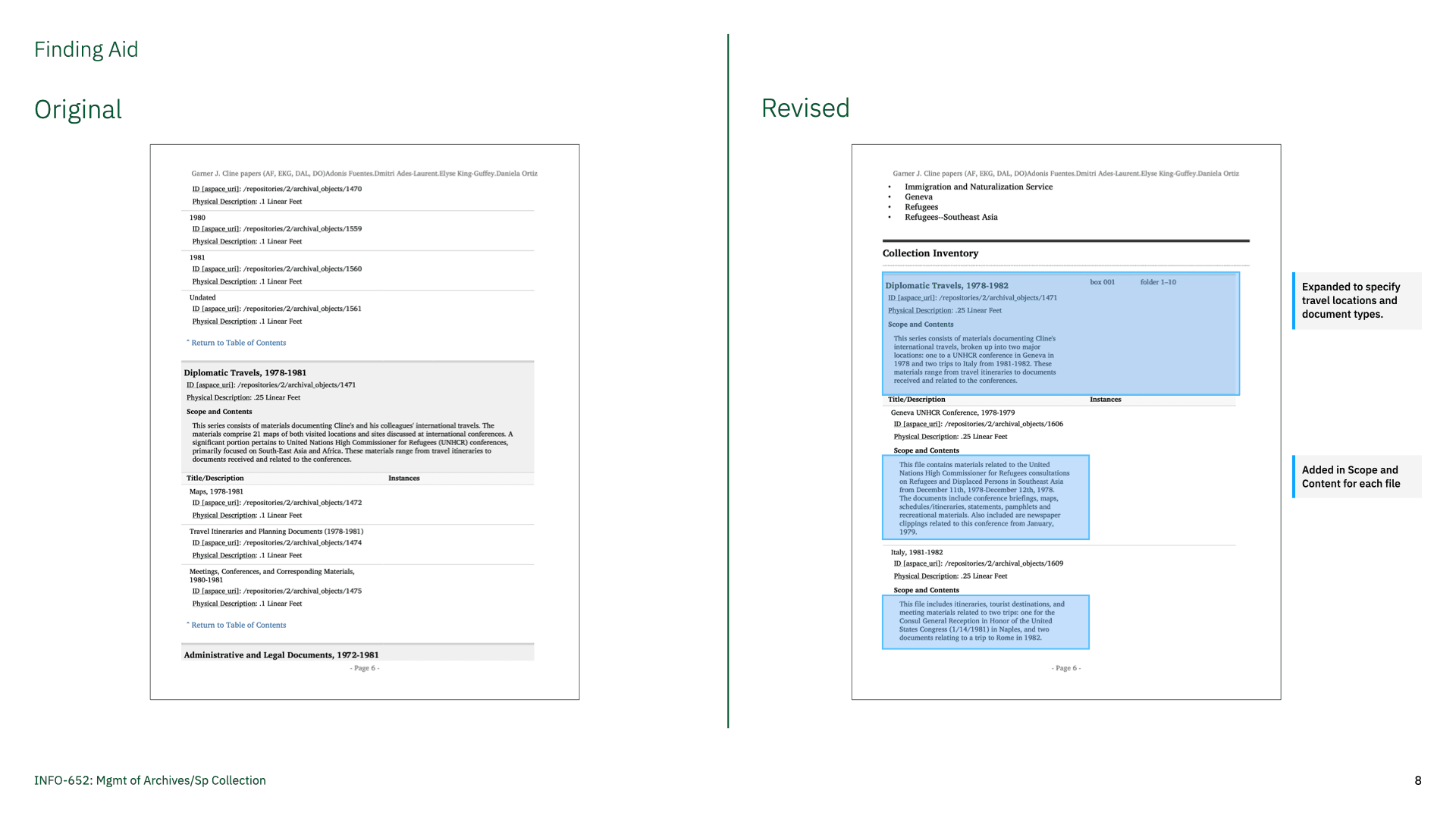
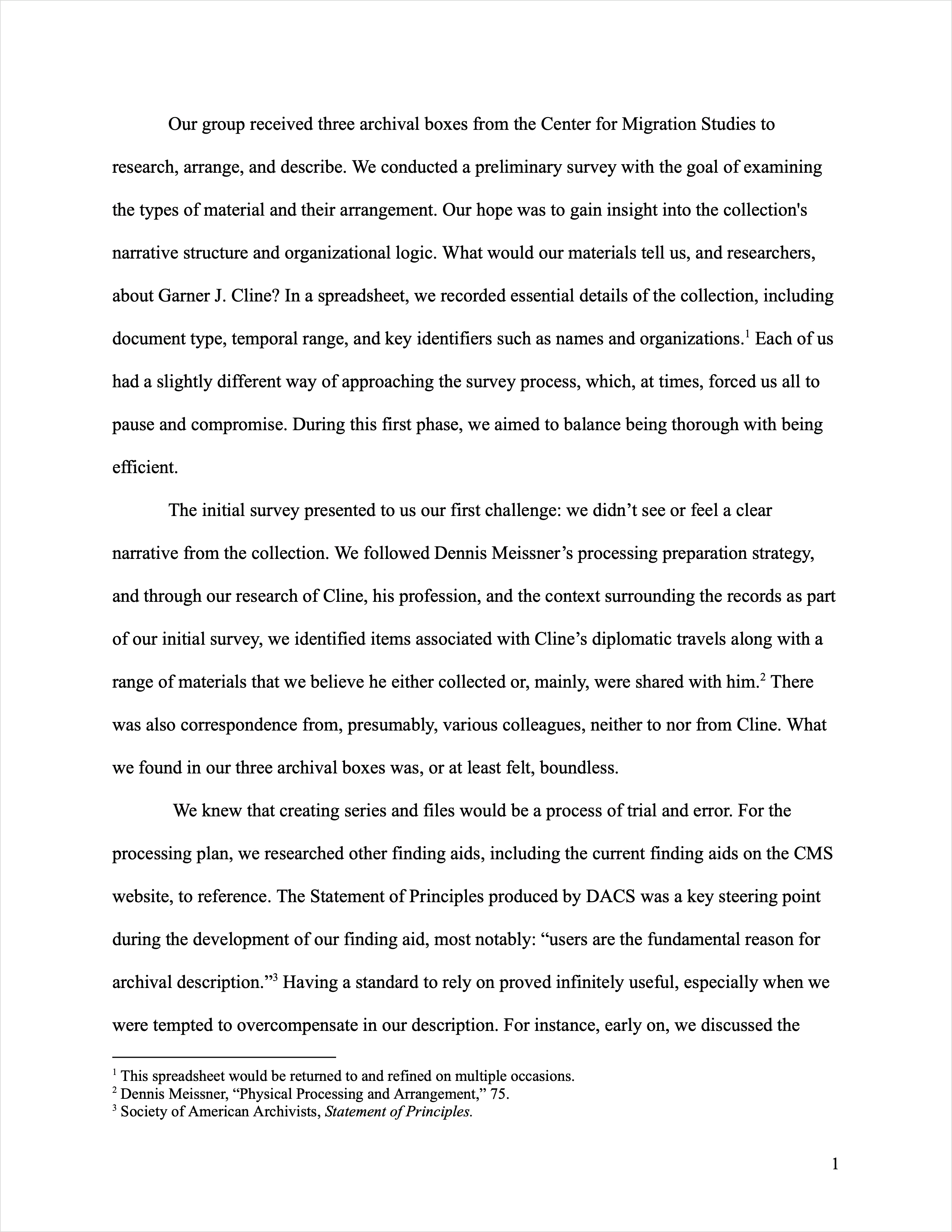
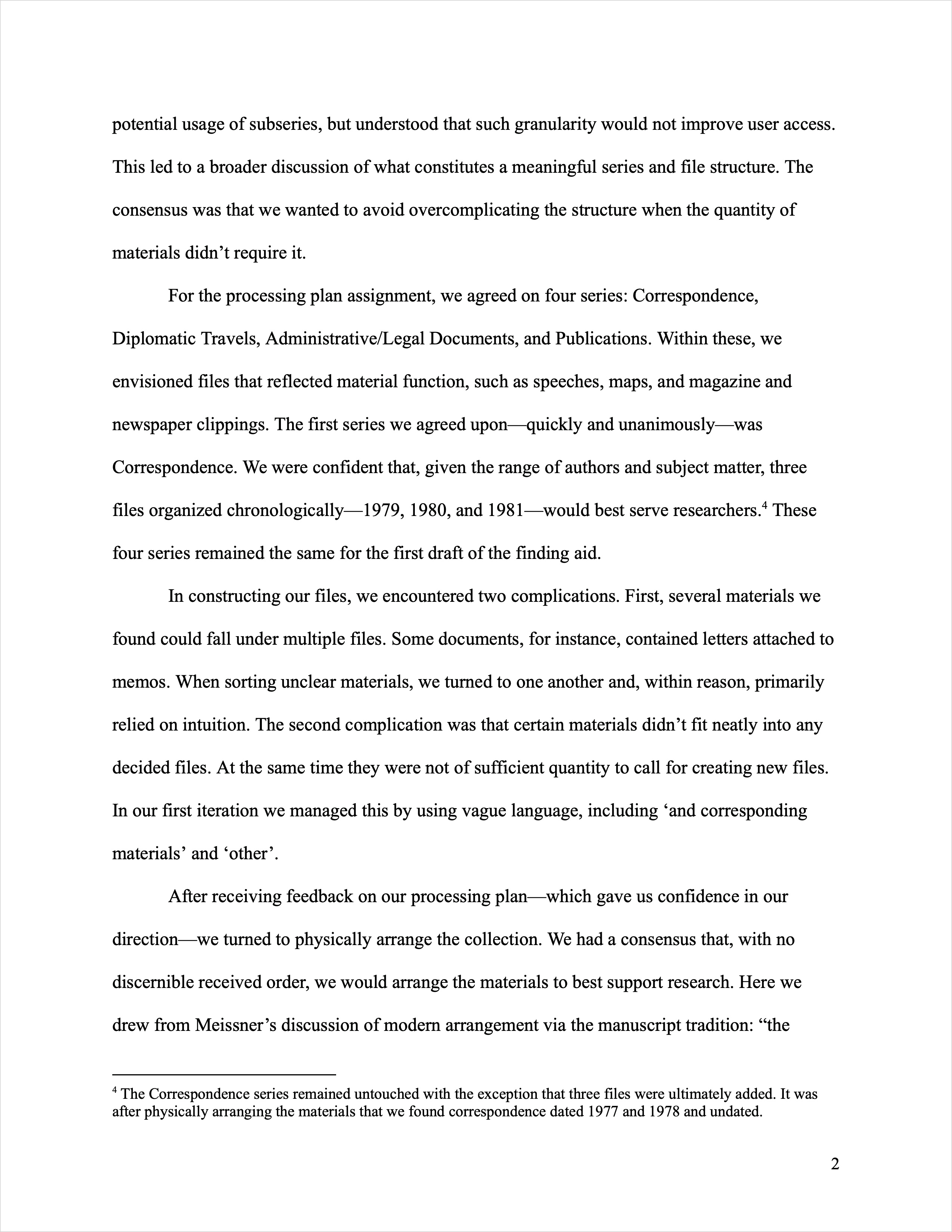
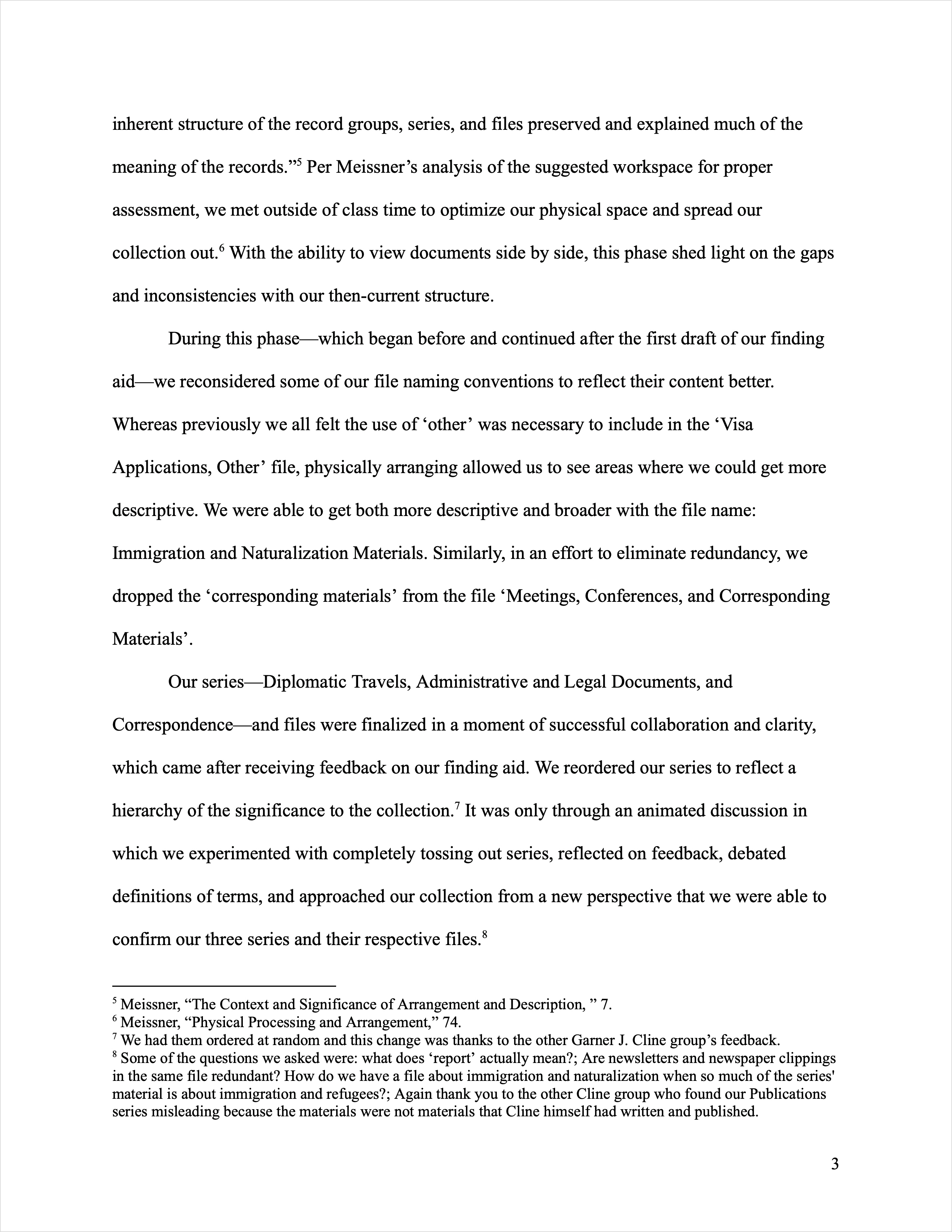
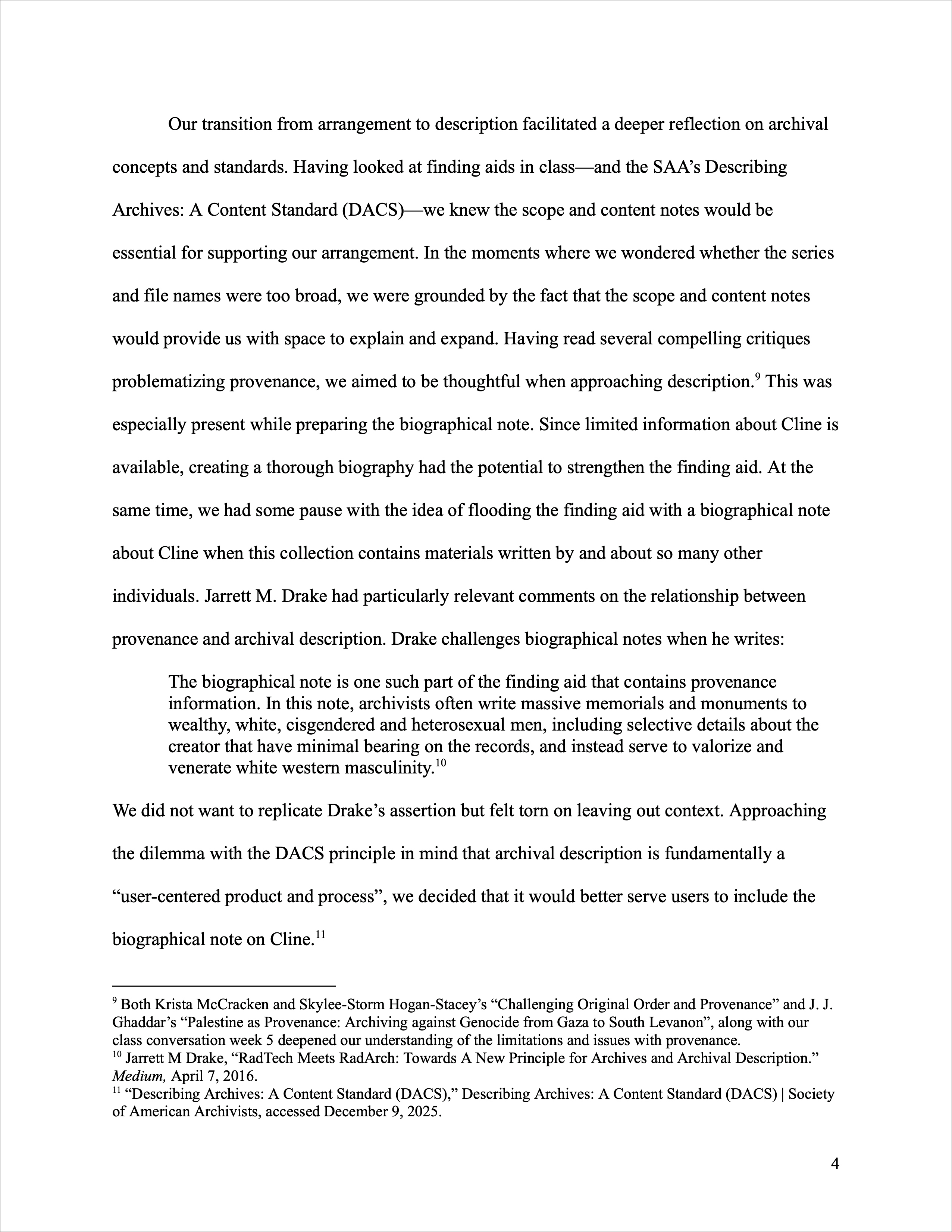
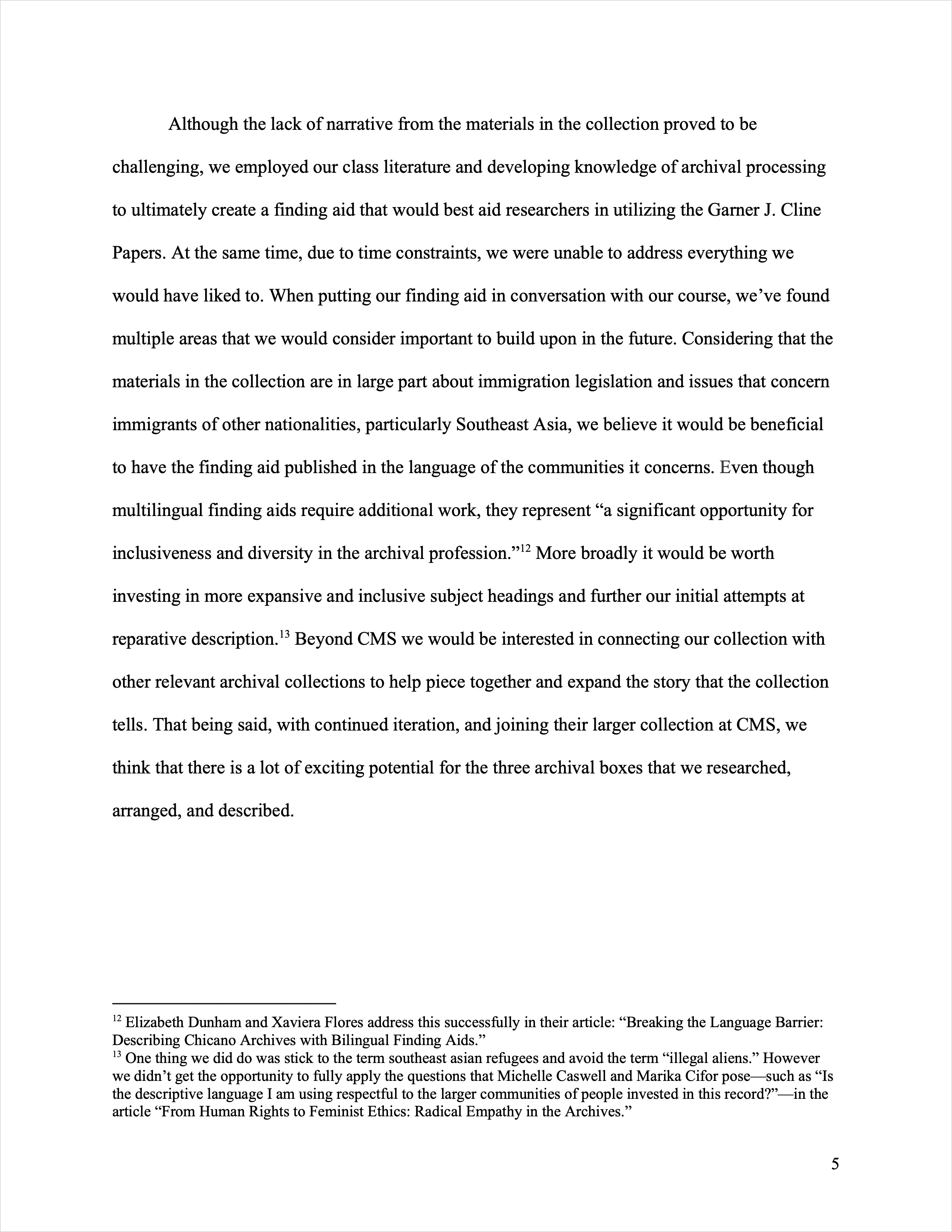
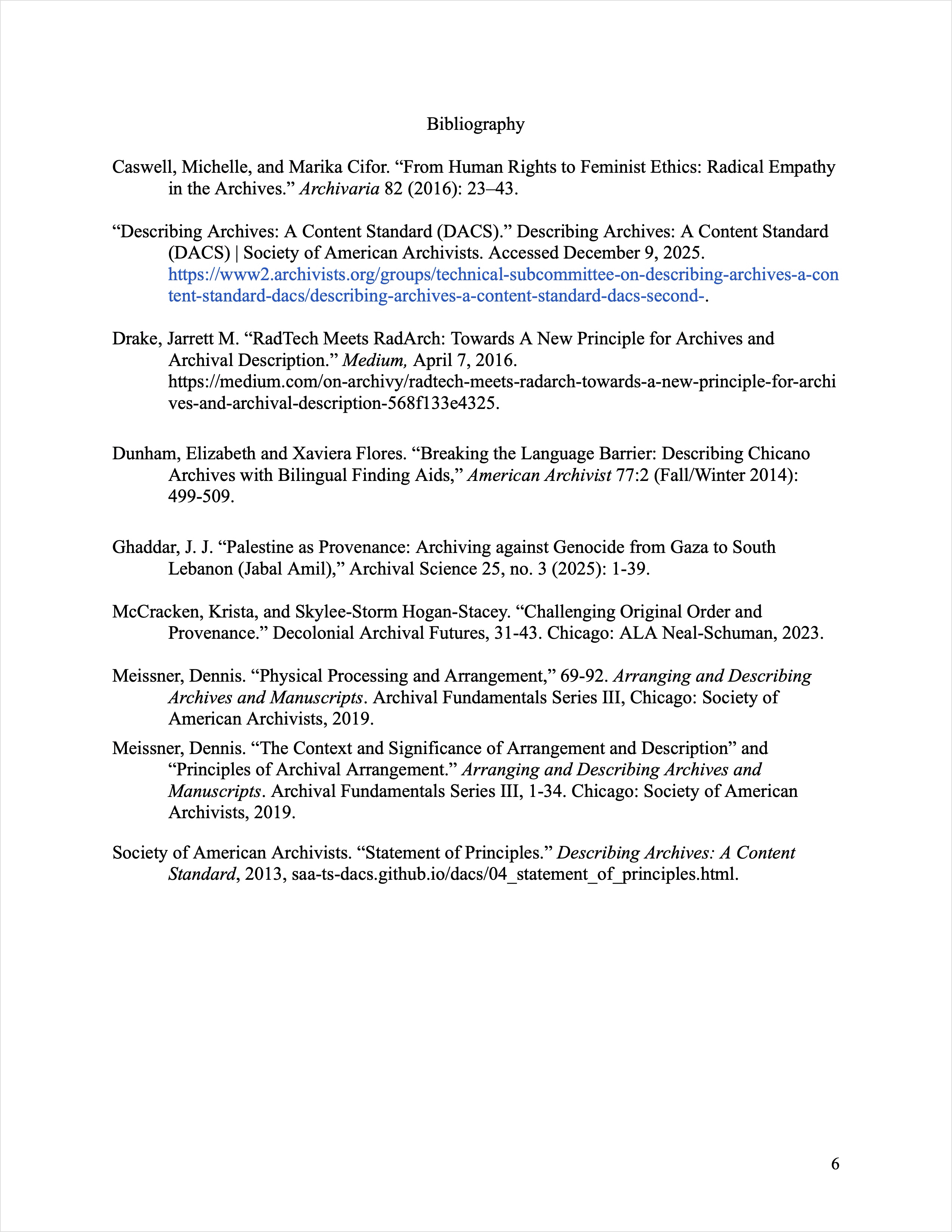
This project involved processing the Garner J. Cline Papers for the Center for Migration Studies of New York (CMS). The main goal was to create a detailed finding aid. As a semester-long project, each group was assigned a collection to process, and the final product was a finding aid for all the materials in that collection. My group was responsible for the papers of Garner J. Cline, who served in a government role and contributed to immigration legislation in the United States from 1972 to 1982.
Methods
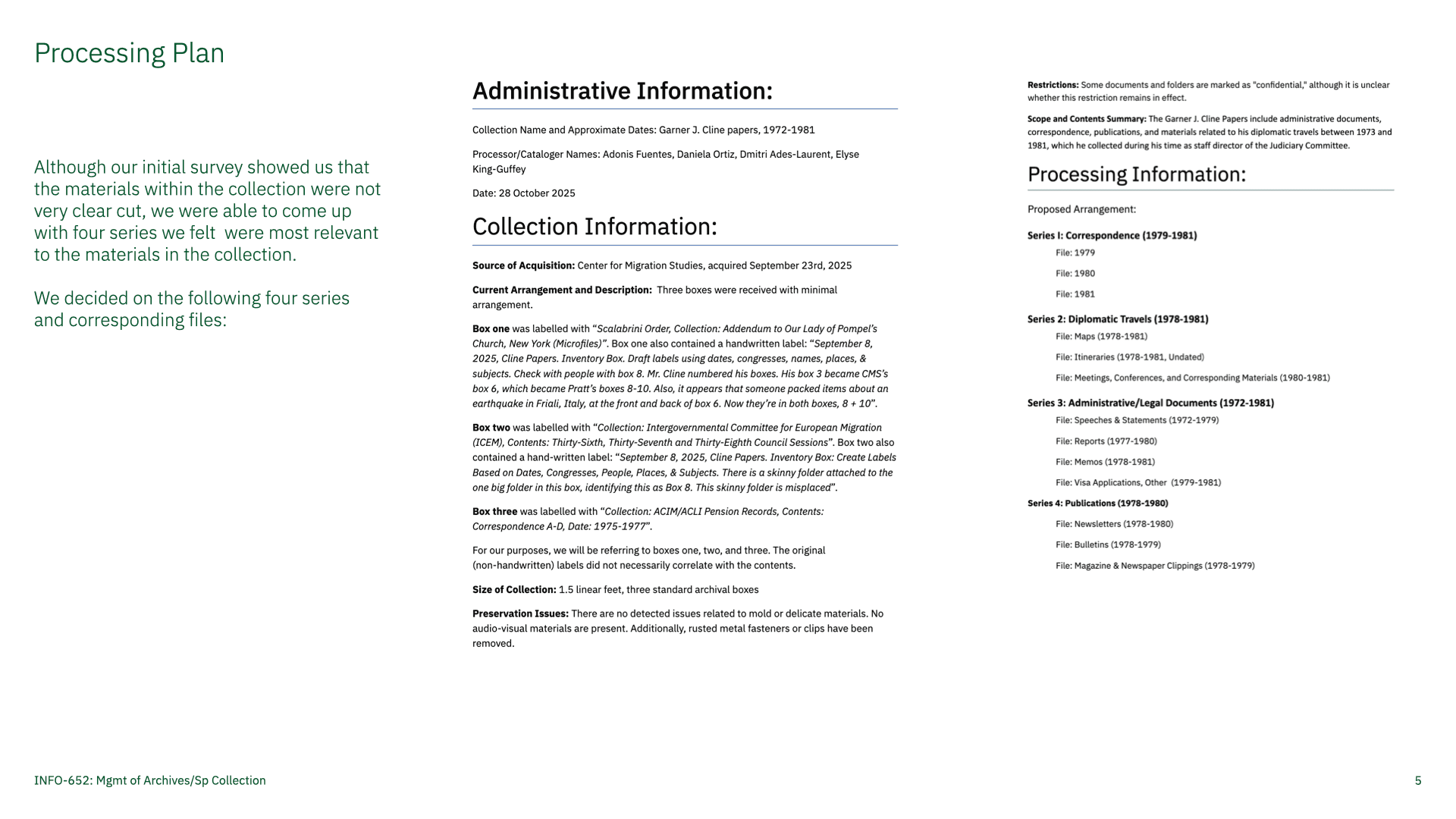
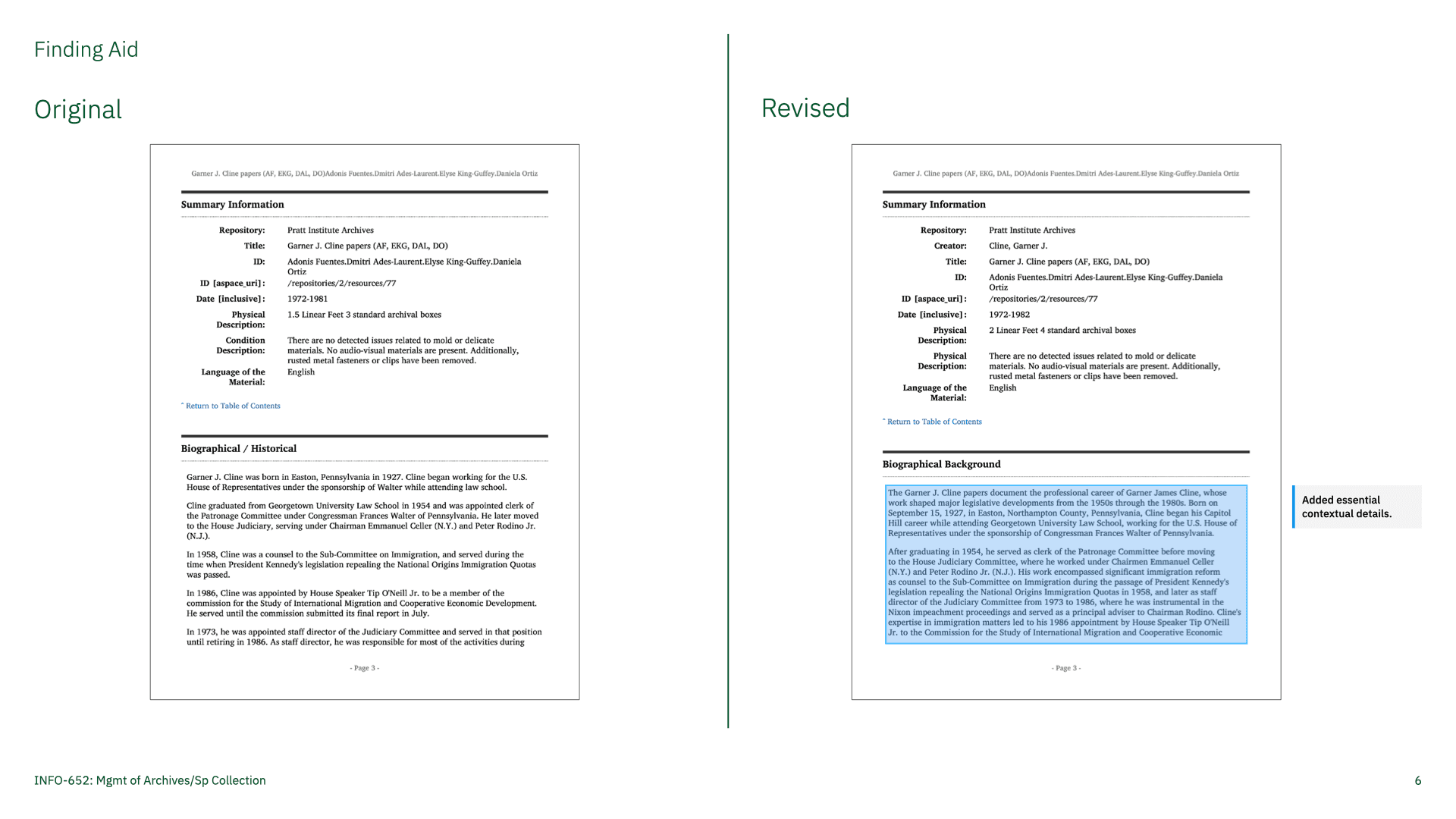
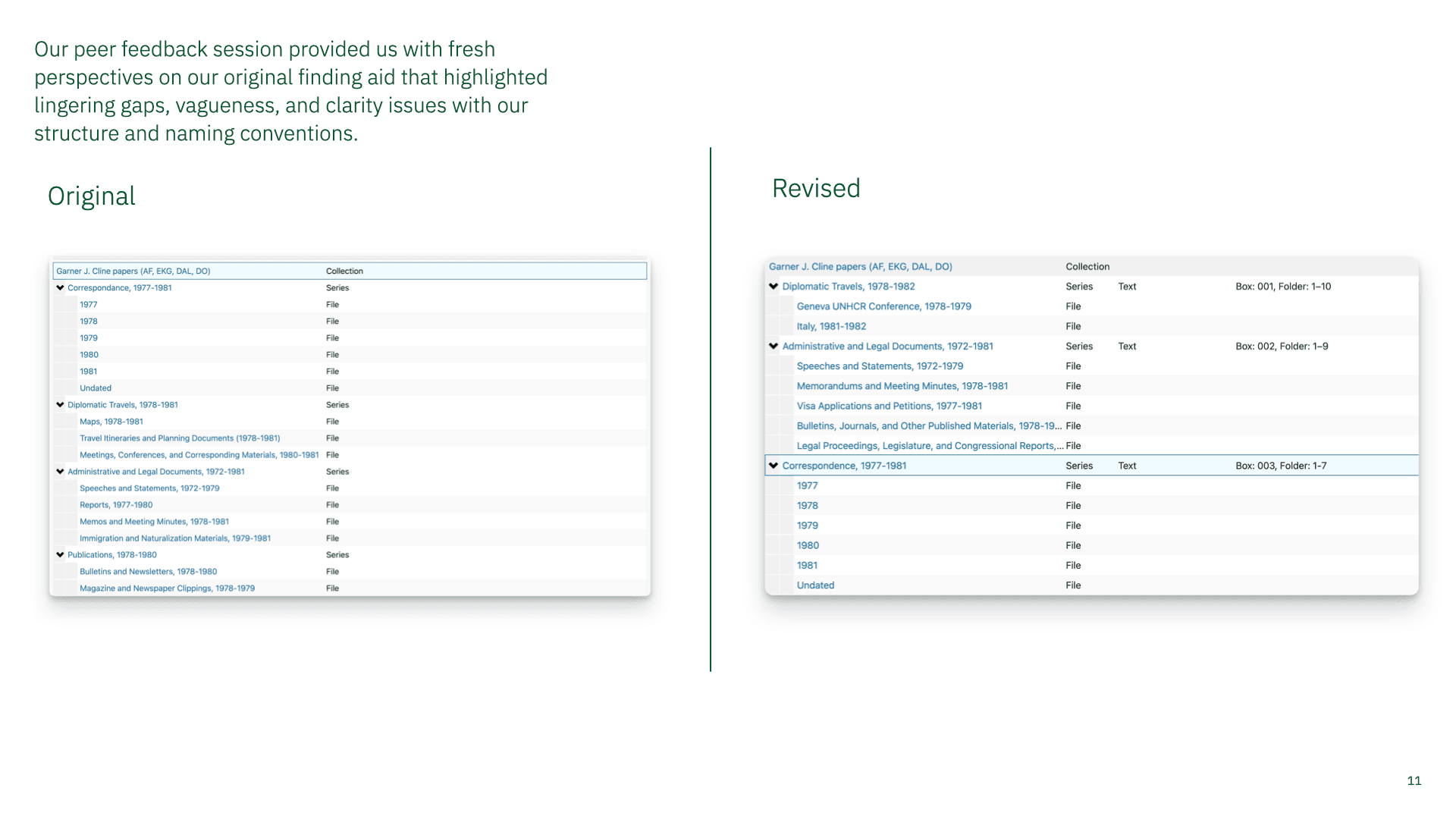
Collection materials were surveyed to inform the intellectual arrangement scheme. Items were rehoused in archival-quality boxes to ensure preservation. Background research was conducted to contextualize records. Descriptive information was entered into ArchivesSpace to create the finding aid, aligning all actions with standard archival methods.
Role & Contributions
This was a group project with Daniela Ortiz, Dmitri Ades Laurent, and Elyse King Guffey, focused on arranging and describing the materials of Mr. Garner J. Cline. The work involved biographical and contextual research, establishing file and series naming conventions, and refining data elements in the group spreadsheet for consistency. The team maintained detailed notes to document decisions and strategies, and evaluated both rights considerations and metadata fields. Throughout the process, the materials context was frequently discussed, especially what future users/researchers might want to know about Cline and his work.
Learning Outcome
Foundations of Library and Information Studies
Rationale
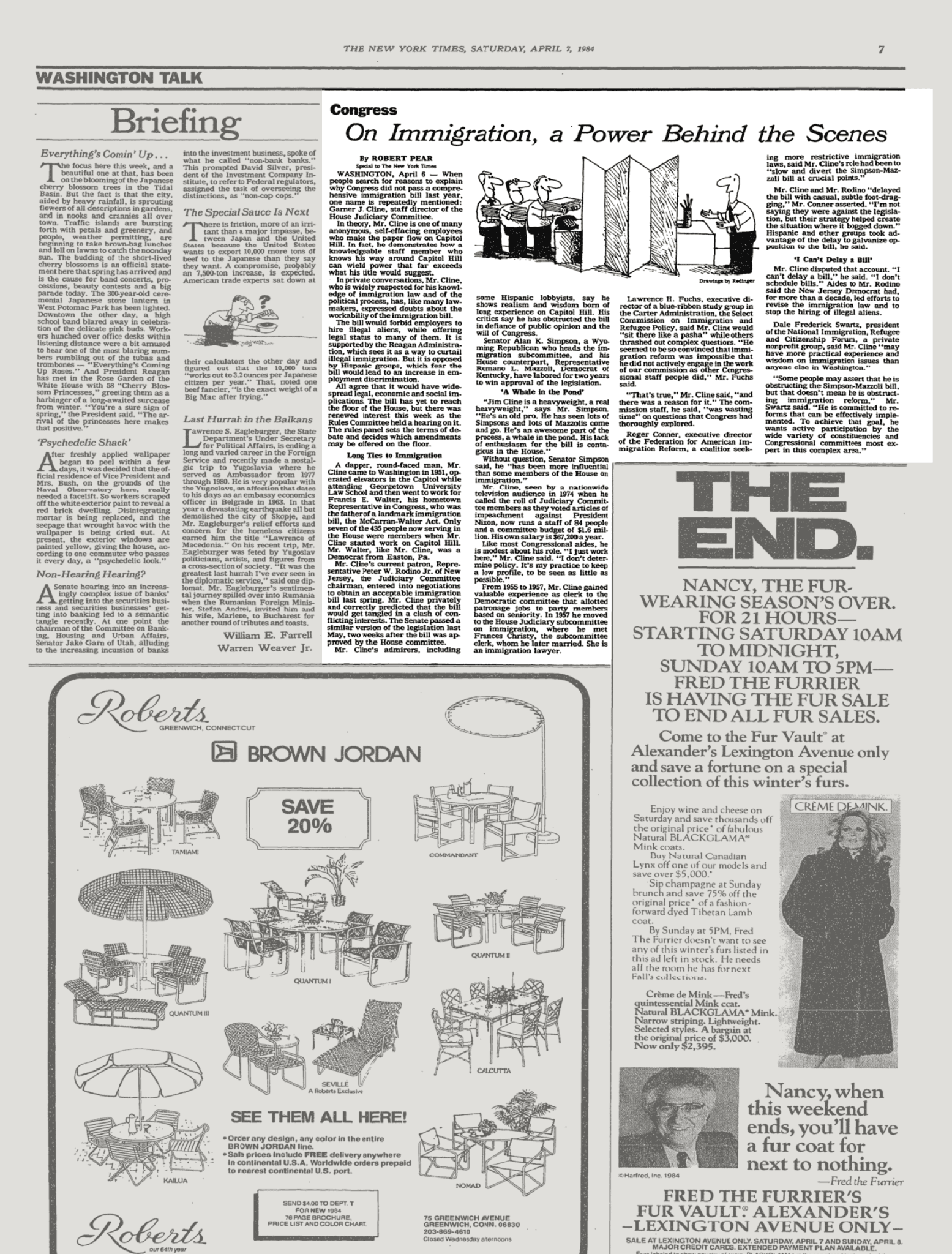
While working on this project, I was struck by how little is known about Garner J. Cline, despite his significant role in government work. Without a clear biographical narrative, I had to make careful choices about how to organize and describe the materials. The collection included confidential government documents and personal correspondence, so we couldn't recommend open access without further review. Instead, we documented the scope and potential sensitivities so a future archivist could make those calls with full context. What I took from processing this collection is that when the record is incomplete, the archivist fills in the gaps whether they mean to or not. The way I grouped folders, the language I used in descriptions, those choices shape what someone will assume about Cline before they even look at the physical record.
Gallery
Project Description
This project involved processing the Garner J. Cline Papers for the Center for Migration Studies of New York (CMS). The main goal was to create a detailed finding aid. As a semester-long project, each group was assigned a collection to process, and the final product was a finding aid for all the materials in that collection. My group was responsible for the papers of Garner J. Cline, who served in a government role and contributed to immigration legislation in the United States from 1972 to 1982.
Methods
Collection materials were surveyed to inform the intellectual arrangement scheme. Items were rehoused in archival-quality boxes to ensure preservation. Background research was conducted to contextualize records. Descriptive information was entered into ArchivesSpace to create the finding aid, aligning all actions with standard archival methods.
Role & Contributions
This was a group project with Daniela Ortiz, Dmitri Ades Laurent, and Elyse King Guffey, focused on arranging and describing the materials of Mr. Garner J. Cline. The work involved biographical and contextual research, establishing file and series naming conventions, and refining data elements in the group spreadsheet for consistency. The team maintained detailed notes to document decisions and strategies, and evaluated both rights considerations and metadata fields. Throughout the process, the materials context was frequently discussed, especially what future users/researchers might want to know about Cline and his work.
Learning Outcome
Foundations of Library and Information Studies
Rationale
While working on this project, I was struck by how little is known about Garner J. Cline, despite his significant role in government work. Without a clear biographical narrative, I had to make careful choices about how to organize and describe the materials. The collection included confidential government documents and personal correspondence, so we couldn't recommend open access without further review. Instead, we documented the scope and potential sensitivities so a future archivist could make those calls with full context. What I took from processing this collection is that when the record is incomplete, the archivist fills in the gaps whether they mean to or not. The way I grouped folders, the language I used in descriptions, those choices shape what someone will assume about Cline before they even look at the physical record.
Gallery