Pratt Course Document Archive (PCDA)
Pratt Course Document Archive (PCDA)
Date
Spring 2025
Spring 2025
Professor
Project Link
Presentation
Project Description
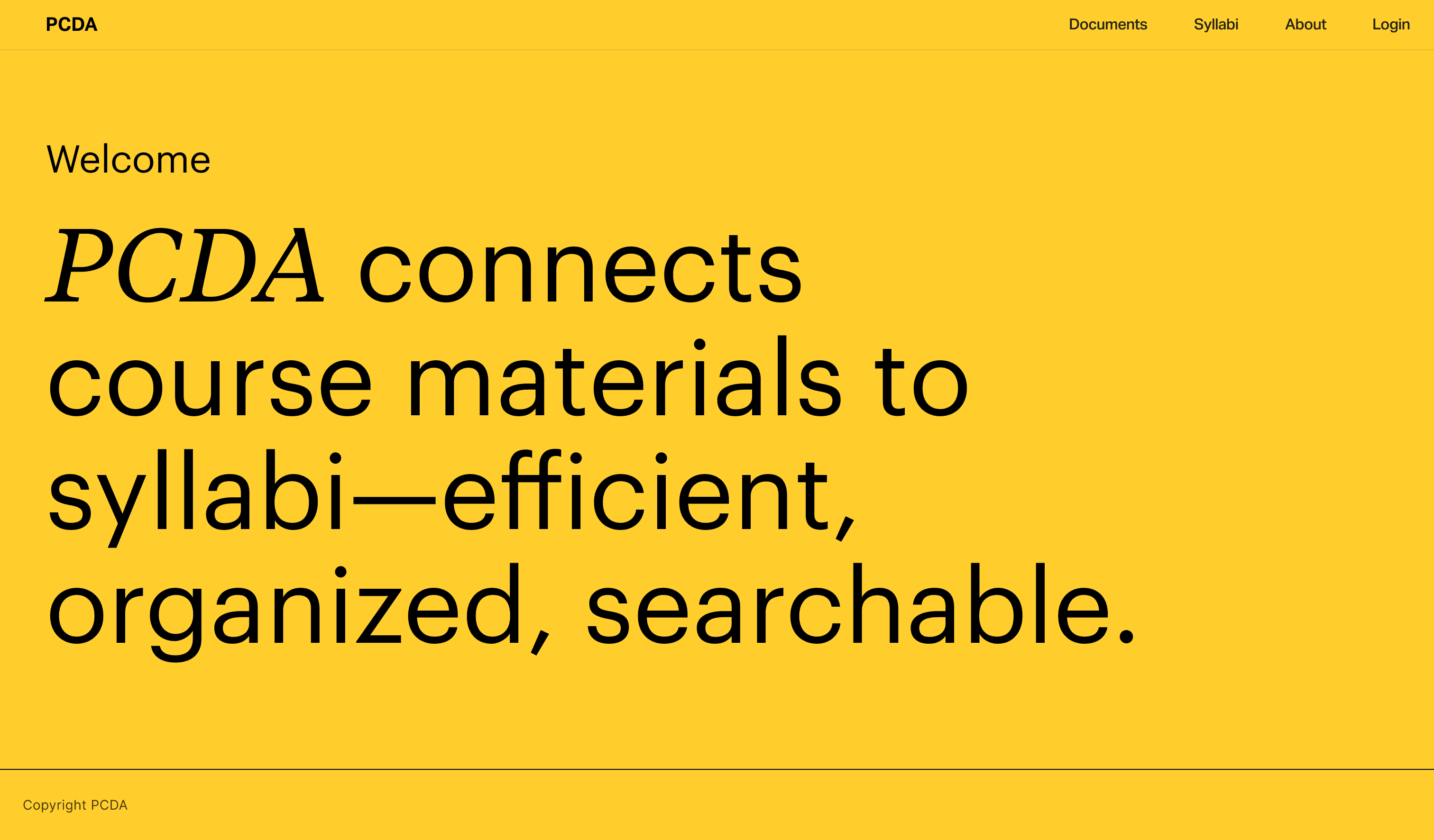
The Pratt Course Document Archive (PCDA) is a database developed to support Pratt Institute students and faculty in organizing and accessing academic course materials. Built as part of the INFO-638-01 Web Development course, the project involved designing a relational database model and integrating it with a web-based interface to manage class documents and reading lists.
Methods
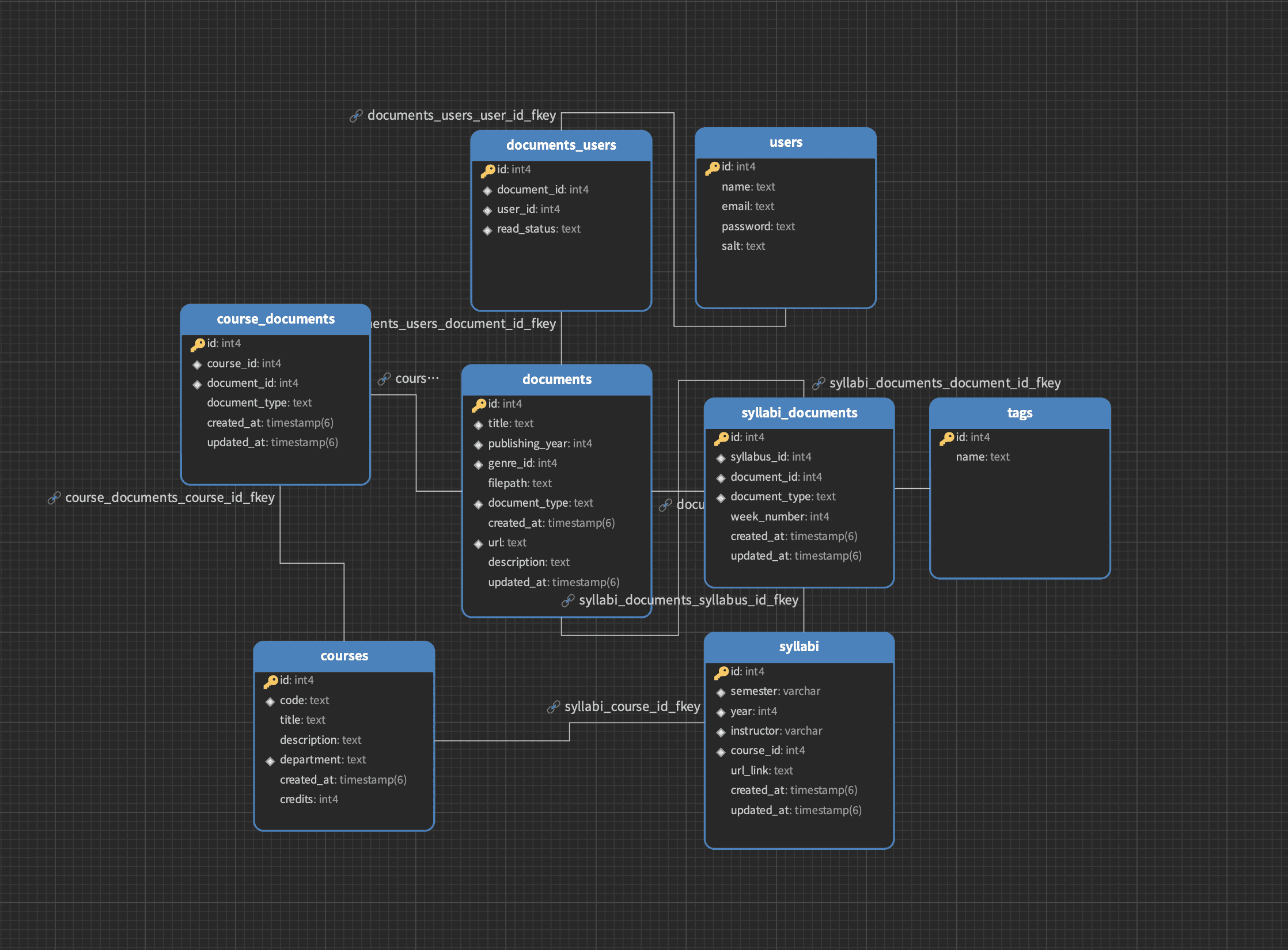
Building the PCDA website began with writing Handlebars JavaScript templates. I then identified and organized the necessary data points and elements for the archive structure. Next, I created a database model to define the relationships among tables, such as courses, professors, and semesters, clarifying how these tables would interact. After confirming the database structure and relationships, I connected the database to the Handlebars templates. To extract syllabus data, including class names, semesters, professors, and course descriptions, I implemented a Google function to automatically pull information from the Google Drive archive folder.
Role & Contributions
I am the sole creator of this work.
Learning Outcome
Technology
Rationale
The existing Pratt iSchool syllabus archive preserves course syllabi but not the readings, resources, and supplementary materials that shape how courses are actually taught. The PCDA addresses this by providing a structured platform for capturing and accessing these materials. The core challenge was designing a schema that could represent the relationships among courses, instructors, and resources without becoming unwieldy, essentially making the data model flexible enough to reflect how teaching materials actually circulate. The result is a working prototype that extends Pratt's syllabus archive to better support collaborative teaching, knowledge sharing, and resource discovery.
Gallery
Project Description
The Pratt Course Document Archive (PCDA) is a database developed to support Pratt Institute students and faculty in organizing and accessing academic course materials. Built as part of the INFO-638-01 Web Development course, the project involved designing a relational database model and integrating it with a web-based interface to manage class documents and reading lists.
Methods
Building the PCDA website began with writing Handlebars JavaScript templates. I then identified and organized the necessary data points and elements for the archive structure. Next, I created a database model to define the relationships among tables, such as courses, professors, and semesters, clarifying how these tables would interact. After confirming the database structure and relationships, I connected the database to the Handlebars templates. To extract syllabus data, including class names, semesters, professors, and course descriptions, I implemented a Google function to automatically pull information from the Google Drive archive folder.
Role & Contributions
I am the sole creator of this work.
Learning Outcome
Technology
Rationale
The existing Pratt iSchool syllabus archive preserves course syllabi but not the readings, resources, and supplementary materials that shape how courses are actually taught. The PCDA addresses this by providing a structured platform for capturing and accessing these materials. The core challenge was designing a schema that could represent the relationships among courses, instructors, and resources without becoming unwieldy, essentially making the data model flexible enough to reflect how teaching materials actually circulate. The result is a working prototype that extends Pratt's syllabus archive to better support collaborative teaching, knowledge sharing, and resource discovery.
Gallery